CASE STUDY FILM
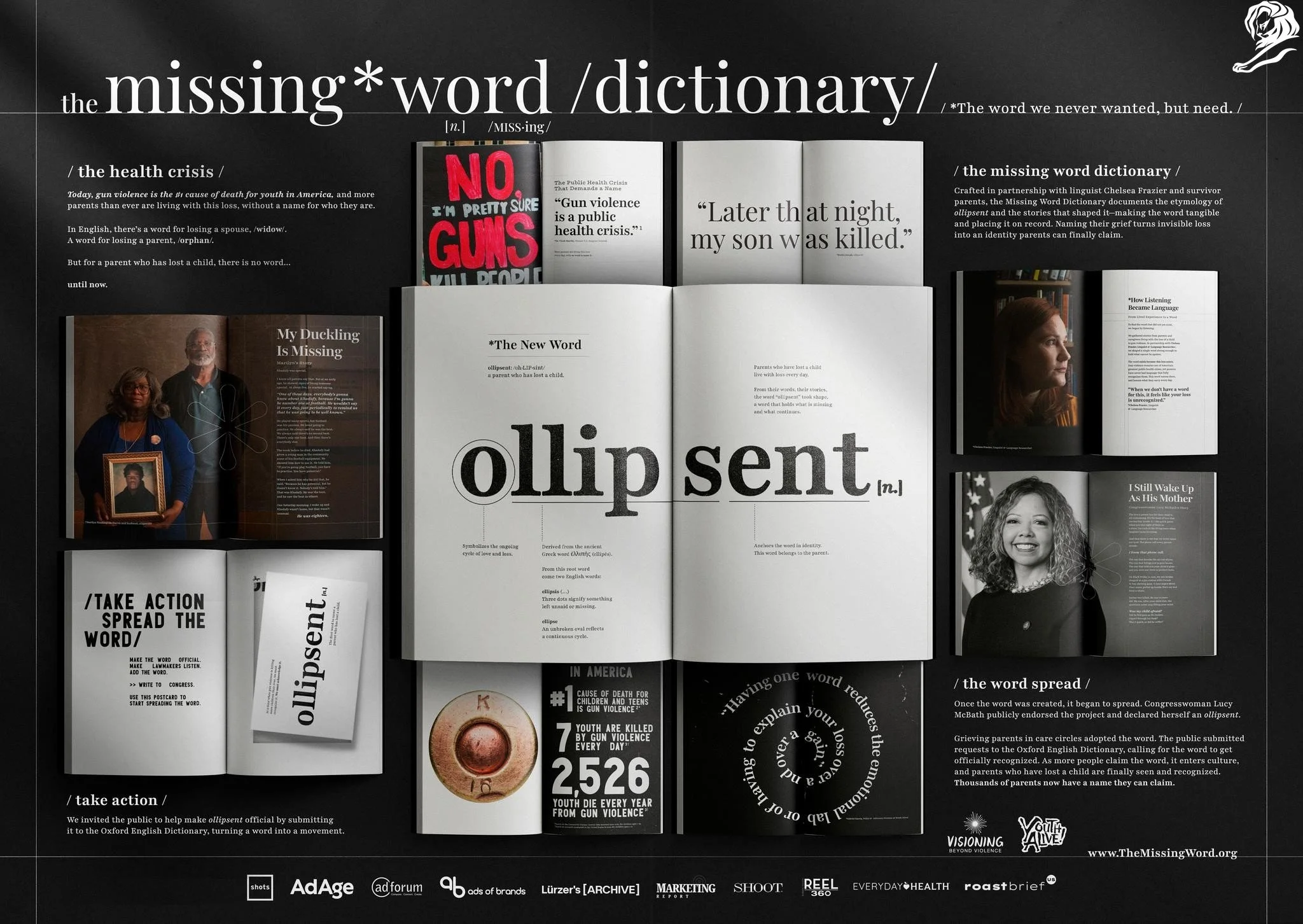
Our StoryIn English, there is a word for someone who loses a spouse: widow. There is a word for someone who loses their parents: orphan. Until now, there has been no word for a parent who loses a child. The word was developed in collaboration with a linguist and parents whose children were killed by gun violence, because it is the leading cause of death among children and teens in the United States. Former Surgeon General Vivek Murthy declared gun violence a public health crisis. Every day in America seven young people are killed by gun violence, and 2,526 youth die each year. Especially at a time when gun violence headlines dominate the news, and the public is increasingly desensitized, the urgency to fill this linguistic gap is even greater, because what is not named is easier to ignore. This was more than just a missing word, it was a missing recognition. The parents left behind had no word to describe who they are.
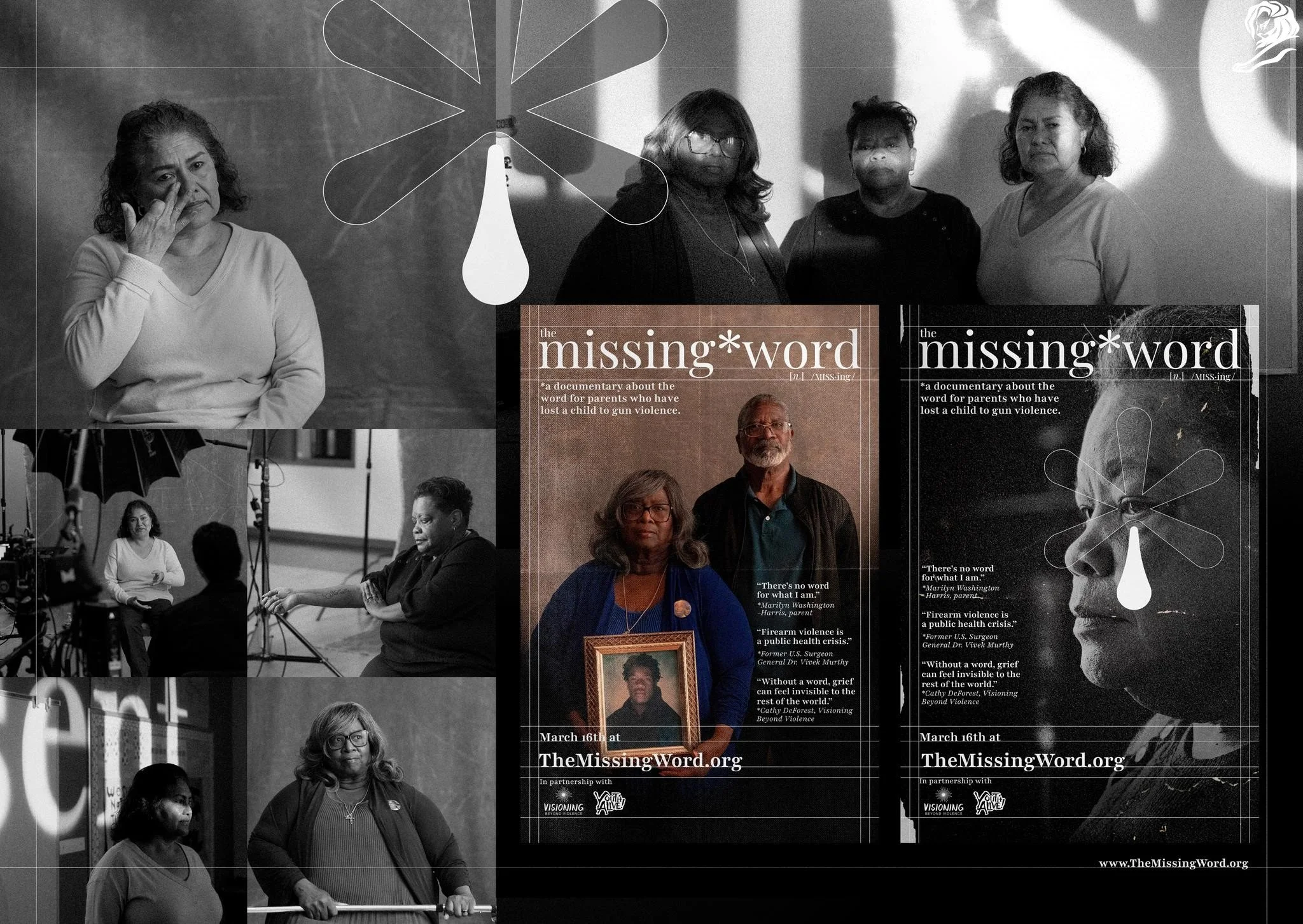
Language shapes what society recognizes and legitimizes. Without a word, the experience of these parents is rendered invisible and their grief is overlooked. While, most gun violence campaigns focus on those who died, The Missing Word Documentary was crafted to shift the focus on the parents who survive, inviting the public to recognize and help make this word part of culture.
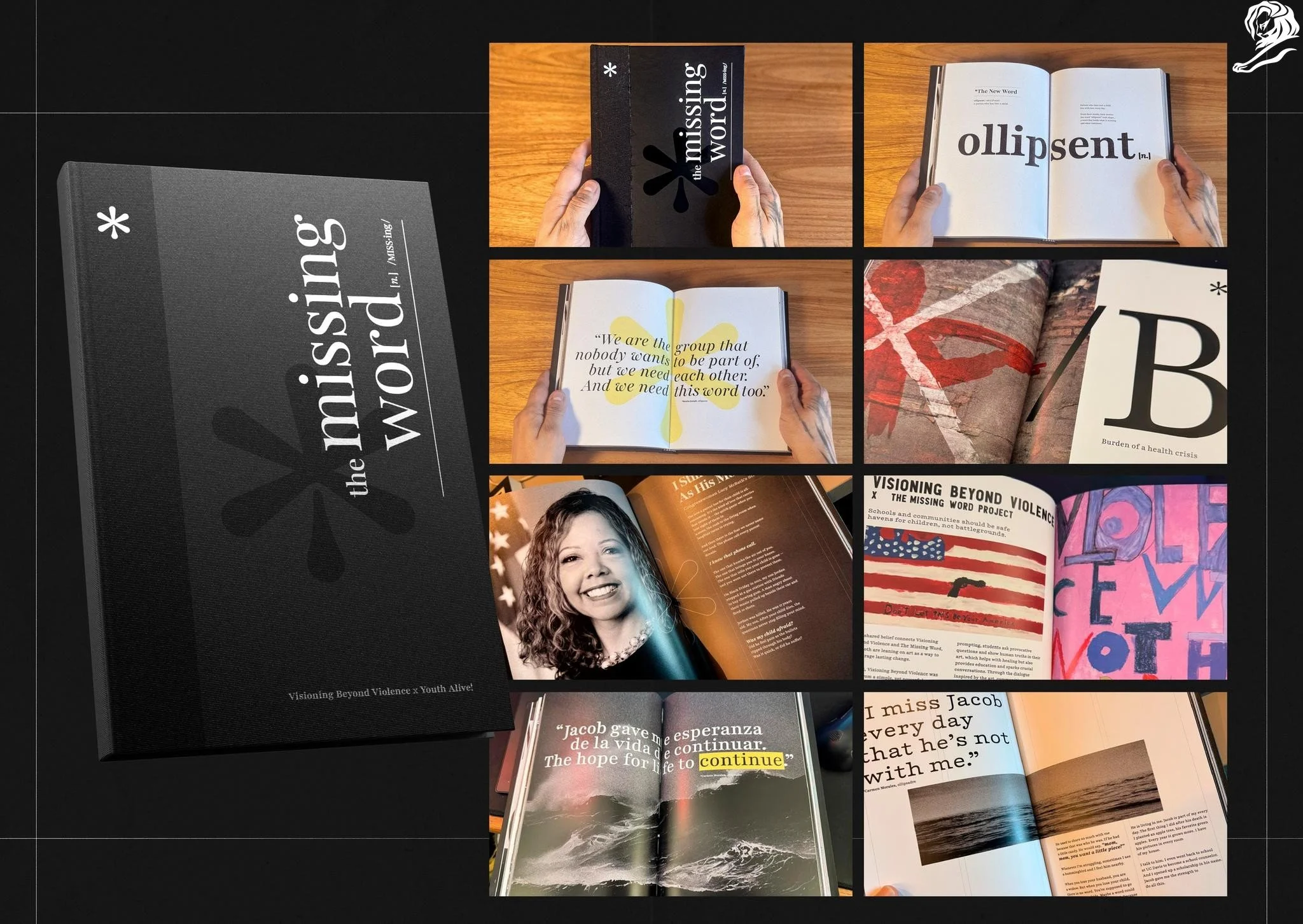
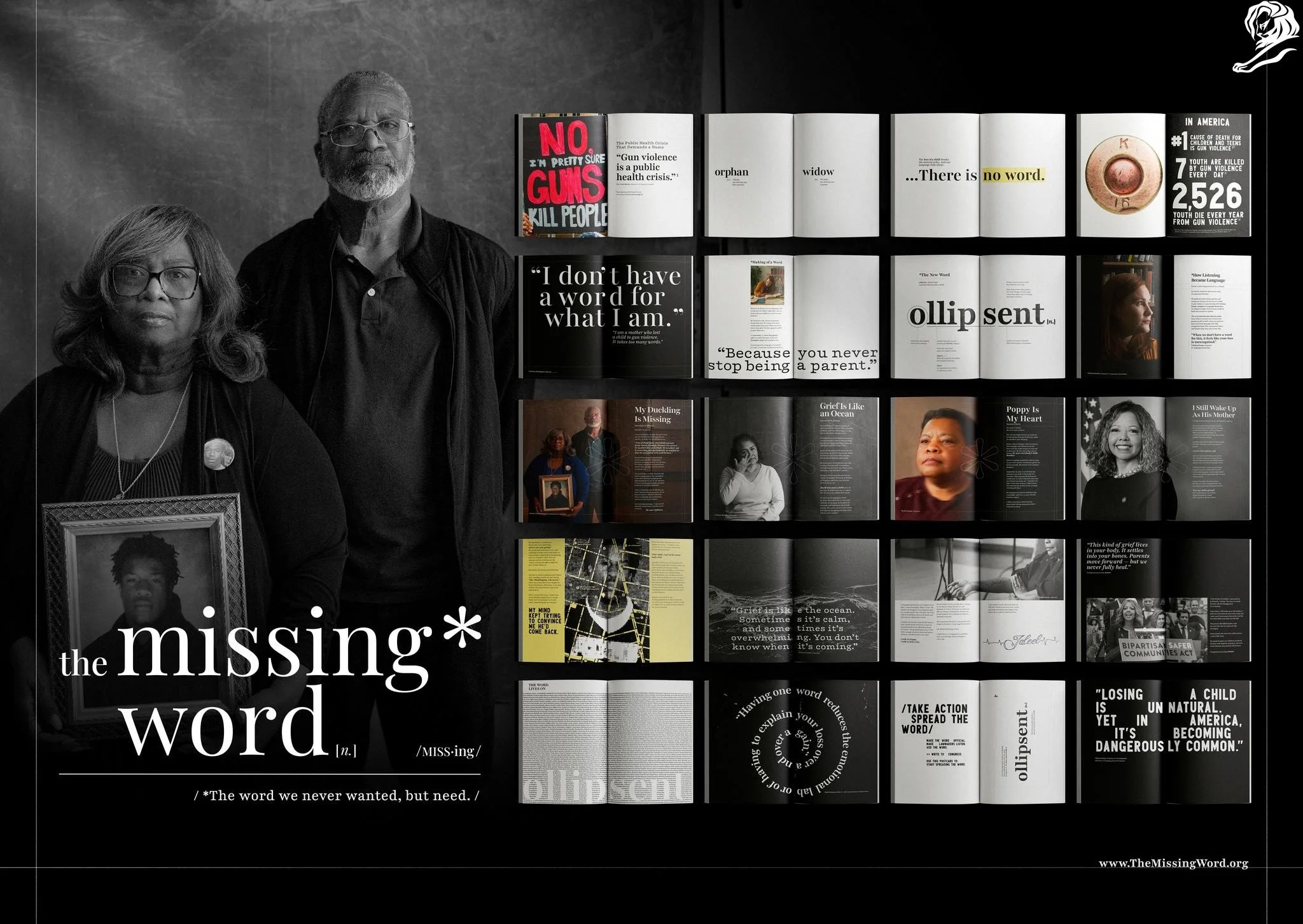
The concept was brought to life by treating ollipsent as a legitimate entry into language. Developed in collaboration with a linguist and shaped by survivor parents, the word carried academic credibility and lived truth. Execution centered on behaving like a real dictionary at every touchpoint. In print, The Missing Word Dictionary meticulously mirrored traditional lexicographic design, transforming the book into an artifact and advocacy tool. A targeted distribution strategy placed copies into the hands of policymakers, health leaders, and organizations positioned to influence recognition, including Congresswoman Lucy McBath. TheMissingWord.org expanded access, while earned media across platforms ensured the work reached industry leaders and those seeking mental health resources. This multi-channel approach bridged cultural conversation with institutional influence. The scale was physically intimate but expansive. Conversation grew as the campaign focused on petitioning for inclusion in the Oxford English Dictionary. The execution raised awareness and mobilized action toward formal recognition.